SES PROPRES MOTS — IN HIS OWN WORDS
En ses propres mots
The following is written by Joachim — in French and in English. Both versions are his.
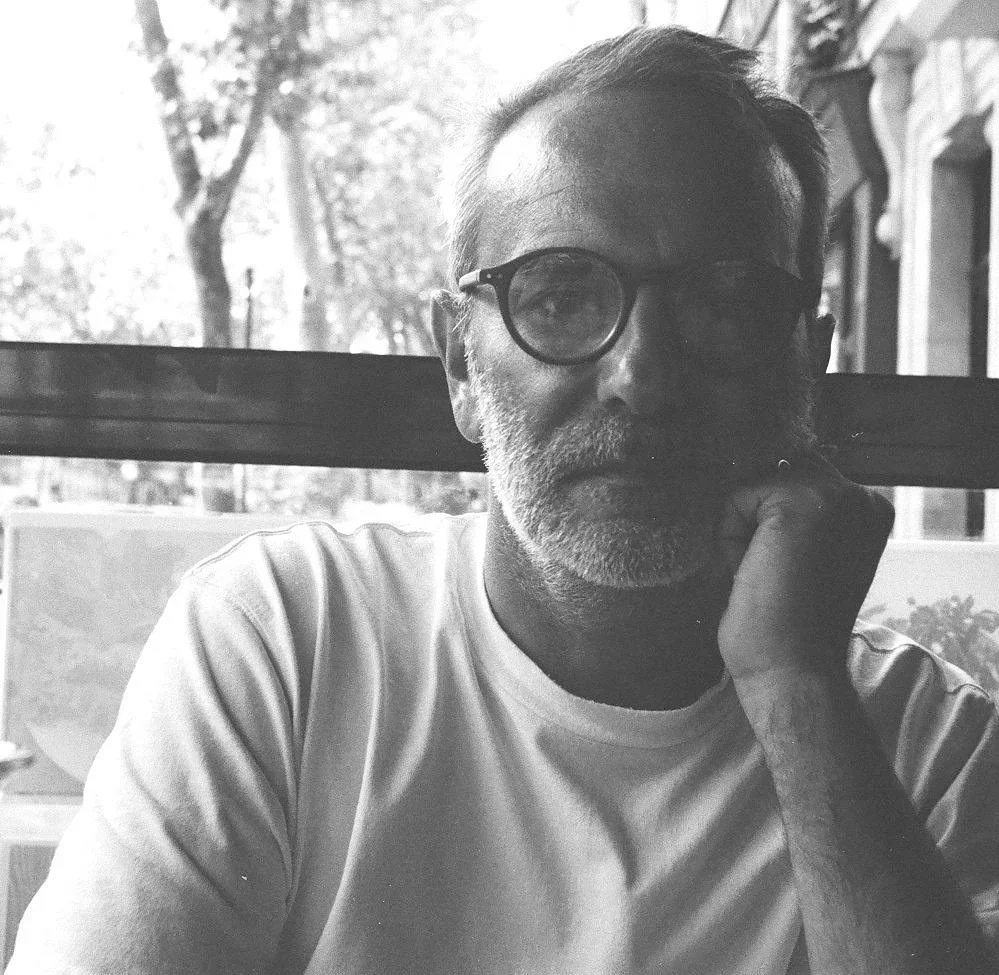
Joachim Lombard
Joachim Lombard grew up near Paris. At eleven, his family moved to London. While his father was away on business, he picked up his Pentax camera and pointed it at the dark courtyard outside his bedroom window. Film. Black and white. The photographs turned out to be great — no kidding.
At twenty, he moved to New York City. The desire to photograph came immediately. He was working in an organic food store to fund his film studies when his wife mentioned, almost in passing, that artists had the right to sell their work on the streets. So he tried it. The photograph of his laundromat sold right away. That gave him confidence.
He bought a darkroom kit and a book on how to print photographs. That was the beginning of thirty years.
Photography enables him to stand solitude. He wouldn't be able to live without it.
At twenty, he moved to New York City. The desire to photograph came immediately. He was working in an organic food store to fund his film studies when his wife mentioned, almost in passing, that artists had the right to sell their work on the streets. So he tried it. The photograph of his laundromat sold right away. That gave him confidence.
He bought a darkroom kit and a book on how to print photographs. That was the beginning of thirty years.
Photography enables him to stand solitude. He wouldn't be able to live without it.
Joachim Lombard
Joachim Lombard a grandi à Paris. À onze ans, sa famille s'installe à Londres. Pendant un voyage d'affaires de son père, il s'empare de son Pentax et le pointe vers la cour sombre visible depuis la fenêtre de sa chambre. Pellicule. Noir et blanc. Les photos s'avèrent remarquables — sans exagérer.
À vingt ans, il s'installe à New York. L'envie de photographier est immédiate. Il travaillait dans une épicerie bio pour financer ses études de cinéma quand sa femme lui glisse, presque en passant, que les artistes ont le droit de vendre leur travail dans la rue. Il essaie. La photo de sa laverie automatique se vend aussitôt. Cela lui donne confiance.
Il achète un kit chambre noire et un livre sur le tirage photographique. C'est le début de trente ans de pratique.
La photographie lui permet de bien vivre la solitude. Il ne pourrait pas faire sans elle.
À vingt ans, il s'installe à New York. L'envie de photographier est immédiate. Il travaillait dans une épicerie bio pour financer ses études de cinéma quand sa femme lui glisse, presque en passant, que les artistes ont le droit de vendre leur travail dans la rue. Il essaie. La photo de sa laverie automatique se vend aussitôt. Cela lui donne confiance.
Il achète un kit chambre noire et un livre sur le tirage photographique. C'est le début de trente ans de pratique.
La photographie lui permet de bien vivre la solitude. Il ne pourrait pas faire sans elle.
Sur le travail — On the work
One subject. Long periods. Patience.
In order to preserve myself and retain focus in a world that constantly steals our attention, I choose to work on a specific subject matter over long periods of time. I always use the same analogical equipment — which requires long stages of time and patience.
Pour me protéger du monde actuel qui vole constamment notre attention, j'aime me concentrer sur un même sujet pendant une longue période. J'utilise depuis toujours le même matériel analogique qui requiert beaucoup de temps et de patience.
En ses propres mots - In his own words
Sur la photographie argentique
On film photography
English
Français
Sur le travail - On the work
About choosing unique subject matters: many may consider this constraining, rather than an opportunity for creative freedom. This thought is not lost on me. I often ask myself: how can I deepen and renew the way I photograph the same subject? Any subject can become remarkable — with the proper amount of attention, and of course... patience.
Sur le travail
Le choix unique d'un sujet pourrait être assimilé à une contrainte. Il m'ouvre au contraire un champ large de possibilités. C'est la discussion que j'ai avec moi-même au fil du temps qui est mon moteur. Je me demande souvent comment approfondir et renouveler ma façon de photographier un même sujet ? Tout peut être beau. Il suffit juste d'accorder à ce qu'on regarde du temps et de l'attention.
Sur l'énergie - On the energy
Taking photographs requires a specific kind of energy. The possibility of a well-balanced black and white composition totally distorts the reality in front of you. There's potential in everything. This makes shooting a compelling and intense experience — but also tedious and tiresome. This is why I schedule only one photo session a week. I limit myself to thirty-six exposures of a black and white film. Each click is the result of thought and consideration — of both the subject and the outcome.
Sur l'énergie
Prendre des photos monopolise un type d'énergie très spécifique. Le fait de tout voir à travers la possibilité d'une composition en noir et blanc équilibrée déforme totalement la réalité. C'est à la fois intéressant et intense, mais aussi fastidieux et fatigant. C'est l'une des raisons pour lesquelles je ne fais environ qu'une séance photo par semaine. J'aime être limité aux 36 expositions de ma pellicule N&B. Lorsque j'appuie sur le bouton, c'est le résultat d'un processus de réflexion.
Sur l'attente - On waiting
Shooting on film does not bring immediate gratification. Waiting for your photos to be developed can be frustrating. However, I enjoy this pause. It creates desire. It is a moment of reflection and anticipation. When you discover your contact sheet, you realize that only five or six images work. But this can be temporary. What you initially fall in love with may turn out to be uninteresting months later. And you might disregard a shot — only to discover its beauty twenty years on. It is a humbling experience. Among all of my negatives, I am sure I have not seen everything yet.
Sur l'attente
La technique argentique n'apporte pas de satisfaction immédiate. Il faut attendre que la pellicule soit développée avant de voir son travail. Je l'apprécie parce qu'elle crée du désir. C'est un moment de réflexion et d'anticipation. Lorsque vous découvrez enfin votre planche contact, une moyenne de 5 ou 6 images sont dignes d'intérêt. Vous pouvez penser que l'une d'entre elles est formidable, et découvrir quelques mois plus tard qu'elle ne l'est pas vraiment. Parmi tous mes négatifs, je suis sûr qu'il reste des photos à découvrir. Une expérience qui rend humble.
"Photography is like a good sauce dish. You have to resist the urge to dig in and let it rest to make it tastier. Only time says what is truly worth remembering."
« La photographie est comme un plat en sauce. Il faut le laisser reposer pour qu'il soit savoureux. Seul le temps qui passe vous indique ce qui vaut la peine d'être retenu ou pas. »
— Joachim Lombard
Ailleurs — Find Joachim